Huawei SUN2000 M3 Review (30/36/40 KTL): The Commercial Inverter Workhorse for 2026

Review of the Huawei SUN2000-30/36/40KTL-M3 commercial inverter — 98.65% efficiency, 4 MPPT, 1100 V DC, IP66. Sizing and derating guidance for GCC C&I rooftops.
If you are building a commercial rooftop between 200 kW and 2 MW anywhere in the GCC, the Huawei SUN2000-30/36/40KTL-M3 sits at the centre of the conversation. It is the M3 platform's mid-power three-phase string inverter, in the size class that warehouses, schools, hypermarkets and light-industrial sheds are built around.
This review is not a brochure recap. We compare the M3 to the SUN2000-50KTL-M3 above it and the SUN2000-25KTL-M5 below it, and tell you exactly when to specify 30, 36 or 40 kW.
Products mentioned in this article
Huawei 25 kW Three-Phase On-Grid Solar Inverter SUN2000-25KTL-M5


- Max DC Voltage
- 1100 V
- MPPT Voltage Range
- 200-1000 V
- No. of MPPTs
- 2
Price incl. VATAED 7,382
Huawei 40 kW On-Grid Solar Inverter SUN2000-40KTL-M3
- Max DC Voltage
- 1100 V
- MPPT Voltage Range
- 200-1000 V
- Max Input Current per MPPT
- 27 A
Price incl. VATAED 14,129
Huawei Centralized Data Logger SmartLogger3000A
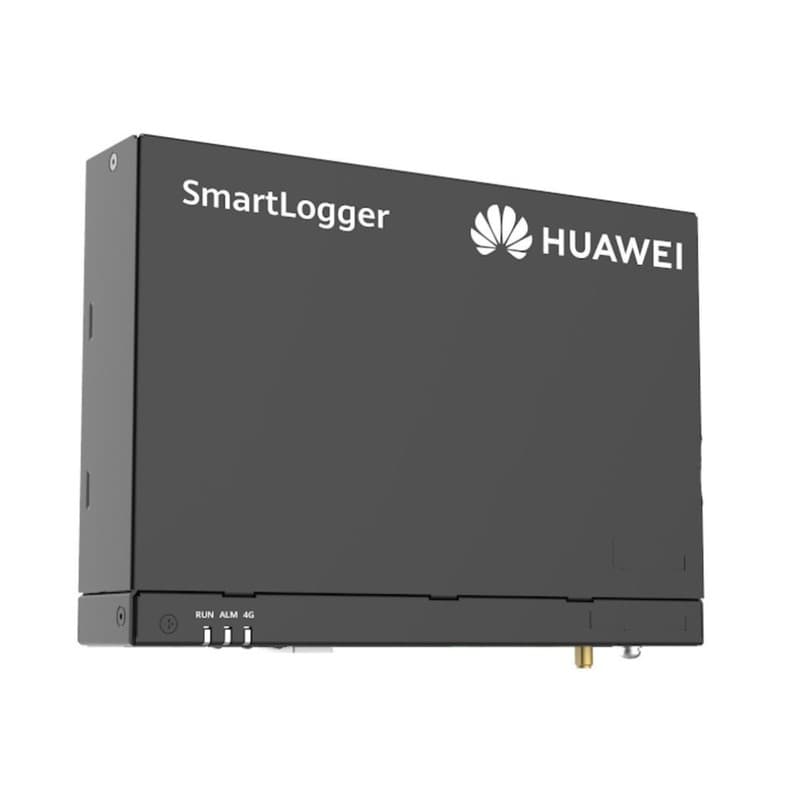
- Max Inverters Supported
- 80
- WAN Port
- 10/100/1000 Mbps
- LAN Port
- 10/100/1000 Mbps
Price incl. VATAED 1,200
Huawei 30 kW On-Grid Solar Inverter SUN2000-30KTL-M3
- Max DC Voltage
- 1100 V
- MPPT Voltage Range
- 200-1000 V
- Max Input Current per MPPT
- 27 A
Price incl. VATAED 8,940
Huawei 36 kW On-Grid Solar Inverter SUN2000-36KTL-M3
- Max DC Voltage
- 1100 V
- MPPT Voltage Range
- 200-1000 V
- Max Input Current per MPPT
- 27 A
Price incl. VATAED 12,053
Huawei 50 kW On-Grid Solar Inverter SUN2000-50KTL-M3

- Max DC Voltage
- 1100 V
- MPPT Voltage Range
- 200-1000 V
- Startup Voltage
- 200 V
Price incl. VATAED 14,624
Who the SUN2000 M3 is built for
The M3 series targets the 30 to 50 kW commercial bracket — the sweet spot for distributed rooftop where you string between 8 and 16 panels per MPPT and need three-phase 400 V grid connection. A typical use case is a 500 kW warehouse roof using 12 to 16 M3 units in parallel, monitored through SmartLogger3000A.
Smaller C&I sites (under 200 kW) usually run the SUN2000-25KTL-M5, and larger sites step up to the H series — covered in our SUN2000 H utility review.
Headline specs at a glance
| Parameter | SUN2000-30KTL-M3 | SUN2000-36KTL-M3 | SUN2000-40KTL-M3 |
|---|---|---|---|
| Rated AC Power | 30 kW | 36 kW | 40 kW |
| Max DC Voltage | 1100 V | 1100 V | 1100 V |
| MPPT Voltage Range | 200-1000 V | 200-1000 V | 200-1000 V |
| MPPTs / Strings | 4 / 8 | 4 / 8 | 4 / 8 |
| Max Input Current per MPPT | 27 A | 27 A | 27 A |
| Max Efficiency | 98.65% | 98.65% | 98.65% |
| European Efficiency | 98.4% | 98.4% | 98.4% |
| Protection | IP66 | IP66 | IP66 |
| Operating Temp | -25 to +60 °C | -25 to +60 °C | -25 to +60 °C |
| Cooling | Smart Air Cooling | Smart Air Cooling | Smart Air Cooling |
| Max Altitude | 4000 m | 4000 m | 4000 m |
The three SKUs share the same chassis, ports and warranty. Pick the rating that gives a DC/AC ratio of 1.15 to 1.35 against your panel array — anything above that and you are clipping power in summer afternoons.
1100 V DC: why it matters for GCC rooftops
The M3 runs to 1100 V DC, which is higher than the 1000 V ceiling on many competing commercial inverters. In practical terms, that lets you string 22 of today's 580-620 W bifacial modules in series instead of 18, cutting string count by roughly 18% and shaving DC cable cost, combiner box count and labour hours on every rooftop.
4 MPPT, 8 inputs: the partial-shading advantage
Each M3 has four independent MPPT trackers feeding eight string inputs. On a real warehouse roof with HVAC units, parapet shadows and irregular roof shapes, this matters. Each MPPT can run a string at a different operating point, so a single shaded string does not drag the whole array down. Compare to two-MPPT 30 kW alternatives where shading on one input cripples 50% of the array.
Smart String monitoring
Huawei's FusionSolar app reports per-string current at 5-minute intervals when paired with a SmartLogger3000. Installers can use this as a soiling detector: when one string drops 8% versus its neighbours over a week, the cleaning crew gets dispatched.
IP66 and Middle East dust hardening
The M3's IP66 enclosure is dust-tight and rated against high-pressure water jets. Combined with conformal-coated PCBs and NOA (Network Optimised Architecture) hardening, the unit is built for Eastern Province sand events and Doha summer humidity cycles. Quarterly heat-sink dusting is still recommended on sites with active dust storms; that 10-minute task per unit preserves the published derating curve.
Thermal performance in 50 °C ambient
Huawei rates the M3 to 60 °C ambient, with derating beginning at 45 °C. Wall-mount it in a shaded location with rear clearance for airflow; direct sun exposure increases derating on the worst August afternoons, so specify a north-facing wall or under-canopy mount whenever possible.
Grid features and compliance
The M3 carries IEC 62109-1/-2, IEC 61727, IEC 62116, EN 50549-1 and the regional GCC grid codes (DEWA, SEC SERA, EWA, OETC). It supports active/reactive power control, LVRT/HVRT, P(F) and Q(U) curves, and integrates with SCADA via Modbus over RS485 or Ethernet. PID recovery is built-in, which extends panel life in humid coastal sites.
Sizing example: 500 kW warehouse in Jebel Ali
For a 500 kW DC array of 850 × 600 W bifacial panels, the typical M3 layout is:
- 13 × SUN2000-40KTL-M3 = 520 kW AC (DC/AC ratio 1.21)
- Each inverter takes 65-66 panels across 8 strings (8-9 panels/string)
- String voltage at 25 °C STC ~720 V, well inside MPPT window
- One SmartLogger3000A handles communication for all 13 inverters
- AC combiner panel + 800 A main breaker to LV distribution
EPC time-to-energise: typically 6 weeks for the inverter half once panels are mechanically installed.
Pricing and availability
The current price of each M3 model is shown on its product page. Store pickup in Dubai or Riyadh, from Dubai stock. The warranty is the 2 years stated on the product page.
Verdict
The SUN2000-30/36/40KTL-M3 is the most credible commercial string inverter on the GCC market in 2026. The combination of 98.65% efficiency, 1100 V DC, 4 MPPT and IP66 NOA hardening sets the benchmark for distributed rooftop above 200 kW. Specify the 40 kW SKU as default, drop to 30 kW only where roof area is so constrained that DC/AC ratio would otherwise exceed 1.35.
An M3 project is larger than the off-grid office system, the biggest worked case on this site, so take your load list to the sizing calculator and put the M3 against neighbouring units on the comparison page.
Frequently Asked Questions
What is the max efficiency of the Huawei SUN2000-M3 series?
How many MPPT trackers does the SUN2000-40KTL-M3 have?
Is the SUN2000-40KTL-M3 DEWA approved?
Can the M3 inverters be installed in parallel for larger arrays?
What is the warranty on Huawei SUN2000-M3 commercial inverters?
How does the M3 perform in 50 °C UAE summer rooftop temperatures?
What is the DC voltage rating of the SUN2000-M3?
- #huawei sun2000 m3 commercial inverter
- #huawei sun2000 30ktl review
- #commercial solar inverter UAE
- #huawei 40ktl m3
- #C&I solar inverter
- #Huawei FusionSolar
- #Huawei Dubai
- #commercial PV 2026
Ready to order?
Every unit in the catalogue carries its price — add it to the cart and order online, then collect it from our store in Dubai or Riyadh.

