Huawei SmartGuard Backup Box Explained — SmartGuard-63A-S0 vs T0

How the Huawei SmartGuard-63A-S0 and SmartGuard-63A-T0 backup boxes deliver whole-home EPS with LUNA2000. Critical-load wiring, switchover time, and the rule for sizing.
A solar-plus-battery system without a backup box can power the loads it is connected to — but the moment the grid drops, the inverter still trips on grid loss and the house goes dark for a few seconds before EPS kicks in (if it kicks in at all). The Huawei SmartGuard-63A-S0 (single-phase) and SmartGuard-63A-T0 (three-phase) backup boxes solve this with a fast automatic transfer switch (ATS) that islands the house from the grid in under 20 ms, lets the SUN2000 hybrid inverter and LUNA2000 battery stack take over, and switches back when the grid returns. This is whole-home backup, not partial-load — done properly it gives the homeowner an experience identical to a generator without the diesel or the noise.
Products mentioned in this article
Huawei Single-Phase Home Backup Box SmartGuard-63A-S0


- Phases
- Single-Phase
- Max Current - Grid
- 63 A
- Max Current - Backup Loads
- 63 A
Price incl. VATAED 1,200
Huawei Home Backup Box SmartGuard-63A-T0
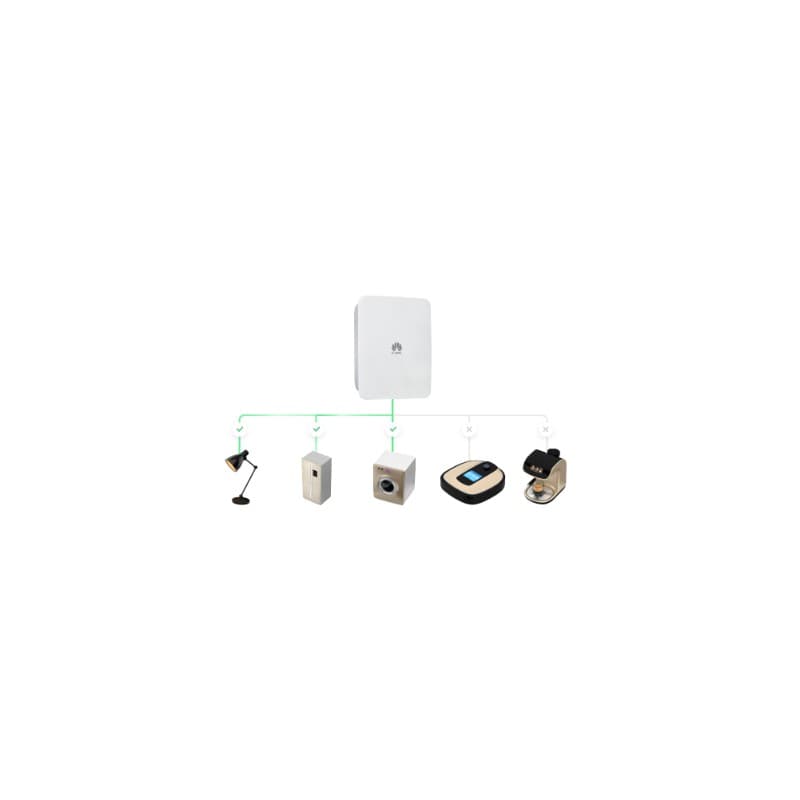
- Phases
- Three-Phase
- Max Current - Grid
- 63 A
- Max Current - Inverter
- 60 A
Price incl. VATAED 1,200
Huawei 5 kWh 450 V Lithium Solar Battery LUNA2000-5-S0

- Usable Capacity
- 5 kWh
- Nominal Voltage (Single-Phase)
- 450 V
- Operating Voltage (Single-Phase)
- 350-560 V
Price incl. VATAED 3,228
Huawei 10 kW Three-Phase On-Grid Solar Inverter SUN2000-10KTL-M1

- Rated AC Power
- 10000 W
- Max DC Voltage
- 1100 V
- Operating Voltage Range
- 140-980 V
Price incl. VATAED 4,847
SmartGuard-63A-S0 vs SmartGuard-63A-T0
- SmartGuard-63A-S0: single-phase 230 V whole-home backup box. 63 A rated on both the grid input and the backup output. Pairs with single-phase SUN2000-2KTL/3KTL/4KTL/5KTL/6KTL-L1 hybrid inverters and LUNA2000-5/10/15-S0 battery stacks.
- SmartGuard-63A-T0: three-phase 400 V whole-home backup box. 63 A per phase on grid input, 60 A per phase on the inverter side. Pairs with three-phase SUN2000-5/6/8/10/12KTL-M1 hybrids and LUNA2000-5/10/15-S0 stacks behind a power conversion system.
Choose the variant by service type — the same rule as the smart meter: count the phases at the main isolator. Single-phase service -> S0. Three-phase service -> T0. Mixing them does not work; the unit's contactor block is sized for the rated phase configuration.
What the SmartGuard Actually Does
Think of the SmartGuard as a smart distribution panel that sits between the utility incomer and the consumer unit. Inside it has three electrical paths:
- Grid in -> House out: normal operating mode. The utility powers the house through the SmartGuard's main contactor. Solar feeds the same bus.
- Grid in -> Inverter in: the SUN2000's grid sense line. When the grid is healthy, the inverter operates in grid-tie mode.
- Inverter out -> House out (EPS bus): when the grid fails, the main contactor opens (islanding the house from the dead grid) and the inverter switches to off-grid mode, energising the EPS bus that feeds the entire consumer unit.
The transition time from grid loss to EPS power is under 20 ms — fast enough that a desktop PC, a router, and an LED light all stay lit through the event. The customer typically only notices because the AC compressor's fan stutters for half a second.
Critical-Load Backup vs Whole-Home Backup
Some competing systems force you to split the consumer unit into "critical loads" (small subset, backed up) and "non-critical loads" (large appliances, not backed up). The Huawei SmartGuard avoids that split when the inverter and battery combination can support the full house load. With a 10 kW SUN2000 plus a 30 kWh LUNA2000 stack, a typical UAE villa with two split ACs and ordinary appliances rides through a 4-6 hour grid outage without any load shedding. The customer sees no difference between grid power and backup power.
When the inverter cannot support the peak load (large central AC, electric oven, pool pump all running together), use the SmartGuard plus a critical-load sub-panel: wire the largest loads off the main bus before the SmartGuard, and route the critical loads through the SmartGuard's backup output. This is a builder decision at install time and is the part that most often gets revisited two years later when the customer wants to extend.
Wiring the SmartGuard-63A-S0 (Single-Phase)
- Mount the SmartGuard on the wall near the consumer unit. It is a large enclosure — allocate roughly 600 × 500 × 200 mm of wall space with 200 mm clearance above for cable entry.
- Wire the utility incomer (L, N, PE) to the SmartGuard's Grid In terminals.
- Wire the consumer unit incoming bus (L, N, PE) to the SmartGuard's Backup Out terminals.
- Wire the SUN2000-L1's AC output (L, N, PE) to the SmartGuard's Inverter In terminals.
- Run the SmartGuard's RS485 communication cable to the SUN2000's COM port (typically pins 5/6 on the residential COM connector — verify against the inverter quick-start sheet).
- Bond the SmartGuard's PE bar to the main earth.
- Close the unit, restore grid, and proceed to commissioning.
Wiring the SmartGuard-63A-T0 (Three-Phase)
Same logical flow as the single-phase but with L1, L2, L3 and N on every terminal block. Two extra notes specific to the three-phase install:
- Phase rotation: match the phase rotation between Grid In and Inverter In. The SmartGuard does not auto-correct rotation — if L1 grid lines up with L2 inverter, the unit will trip on synchronisation fault every time the grid returns. Use a phase-rotation meter at first power-up.
- Load balancing: the T0 is sized at 60 A per phase on the inverter side, so the customer's three-phase loads must be reasonably balanced. A large single-phase 10 kW load on L1 with nothing on L2/L3 will hit the per-phase limit while the other phases idle.
Commissioning the SmartGuard in FusionSolar
The SUN2000 must be told that a SmartGuard is present, otherwise it does not enable EPS mode. In the FusionSolar Installer app:
- Connect to the SUN2000 over Bluetooth.
- Maintenance -> Settings -> Backup Box.
- Set Backup Box Type to SmartGuard-63A-S0 or SmartGuard-63A-T0 to match your install.
- Enable EPS mode. Set the EPS reserve SOC (typically 20-30%) — the battery will not discharge below this in normal grid-tie operation, preserving capacity for the next outage.
- Run the Backup Test from the same menu. The SUN2000 will simulate a grid loss, open the SmartGuard contactor, switch to off-grid mode for 10-30 seconds, then return to grid-tie. Walk the customer through this test on handover.
LUNA2000 Battery Pairing
The SmartGuard relies on the LUNA2000 battery for EPS energy. Size the battery for the customer's typical outage duration:
- UAE/KSA grid (rare outages, 30-60 minute typical): one LUNA2000-5-S0 (5 kWh) is enough for most villas.
- Less reliable grids (Jordan, Egypt, Lebanon, Pakistan): plan two to three LUNA2000-5-S0 modules for a 10-15 kWh buffer.
- Full off-grid operation (rural farm, remote villa): stack to the SUN2000's maximum 30 kWh and combine with a generator interlock for multi-day autonomy.
The LUNA2000 is modular — start with one module, add more later as the customer's needs grow. The SmartGuard does not need to be resized when battery capacity changes; only the inverter capacity caps the maximum backup load.
Common SmartGuard Faults and Fixes
- EPS does not activate on grid loss: Backup Box Type not set in FusionSolar Installer, or EPS reserve SOC was reached and battery is empty. Verify the setting and SOC before suspecting hardware.
- Slow transfer time: RS485 comms between SmartGuard and SUN2000 not connected — the inverter does not know the grid is gone fast enough. Re-terminate the comms cable.
- Three-phase trips on grid return: phase rotation mismatch. Swap two of the three Inverter In phases.
- Per-phase overload alarm: heavy single-phase load on one phase of a three-phase system. Rebalance loads or accept the alarm.
- Backup runs for a few minutes then drops: battery SOC reached the EPS cutoff (typically 5% absolute minimum). Increase battery capacity or reduce backup load.
Sizing the Inverter for Backup Peak Load
Whole-home backup is not just about average load — it is about the worst-case surge that hits the EPS bus during an outage. When SmartGuard transfers the house to off-grid mode, every motor starts from the inverter, not from a stiff utility transformer. AC compressors draw four to six times their running current for the first half-second; an electric kettle pulls 2.5-3 kW the instant it switches on; an oven element ramps to full load in under a second. The SUN2000 hybrid can deliver typically 1.5x rated AC output for up to 60 seconds — but only if the rated capacity itself is sized for steady-state demand. A 10 kW SUN2000-10KTL-M1 covers a typical four-bedroom villa with two splits; an 8 kW unit will trip on EPS overload the first time the oven runs while both ACs cycle. Document the largest simultaneous loads on the install survey and size from there.
Solar Charging During Outage
A long daytime outage is the easiest scenario for a SmartGuard install: while the house runs on EPS, the PV array continues to produce, the SUN2000 directs PV power to the loads first, and any surplus charges the LUNA2000. If the outage starts at 10:00 with the battery at 60% SOC and the sky is clear, the battery will typically be at 90-100% by mid-afternoon while the house has been running normally the whole time. This is the behaviour that makes whole-home backup feasible in regions with daily multi-hour outages — the customer never notices the grid is gone because solar is doing the work. The only risk is a cloud event that crashes PV while a heavy load is on; the LUNA2000 covers the dip in a few hundred milliseconds and the homeowner does not see a flicker.
Black-Start Behaviour
The hardest scenario is the opposite — an outage that drains the battery to the EPS cutoff and runs into a cloudy morning. The SUN2000 supports black-start from PV alone when SmartGuard is set to PV-priority restart: as soon as DC input crosses the start-up threshold (typically 200-250 V on the MPPT bus), the inverter wakes, energises the EPS bus from PV directly, and begins charging LUNA2000 from any surplus. The house comes back to life as the sun rises, even with zero battery and zero grid. Confirm during commissioning by running the Backup Test at low SOC.
Generator Integration with SmartGuard
For very long outages (multi-day grid failures in rural areas, or off-grid sites that need a winter fallback), a diesel or petrol generator can be wired upstream of the SmartGuard's Grid In terminals through a manual changeover switch. The SmartGuard treats genset power exactly like utility power — it monitors voltage and frequency on the Grid In side, and when the genset is running and stable it transfers the house back to "grid" mode, charging the LUNA2000 and running loads from the generator. When the genset is shut down or its output collapses, the SmartGuard transfers back to EPS in under 20 ms just as it would for a utility outage. This pattern lets a small 5 kVA generator support a much larger house, because the genset only needs to cover charge current plus average load, not peak load.
Notification and Outage Logging
FusionSolar pushes a phone notification the instant EPS activates — typical wording is "Grid power lost. Backup active." A second arrives when the grid returns. Every outage event is logged with timestamp, duration, kWh delivered, peak EPS power, and end-of-outage SOC. For installers managing fleets this log is the fastest way to spot a misbehaving install — a customer reporting "the lights flicker" usually corresponds to a dozen short outage events, signalling a flaky utility supply rather than a SmartGuard fault.
Comparison to Manual Transfer Switch
A manual ATS seems tempting on paper — and is exactly the wrong solution for a PV-coupled house. Two reasons. First, anti-islanding: a grid-tied inverter that does not know the grid is gone will continue exporting onto a dead line, which is a lethal hazard for utility workers and illegal in every Gulf and African market. The SmartGuard speaks to the SUN2000 over RS485, so the inverter switches off-grid mode in the same transition where the contactor opens. Second, automation: a manual ATS requires the homeowner to walk to the switch in the dark; SmartGuard does this in under 20 ms unattended. The cost difference is recovered the first time the homeowner does not have to leave the sofa during an outage.
Maintenance and Annual Inspection
The SmartGuard is largely maintenance-free for the first five years, but a competent installer should book an annual visit. Checklist: visual inspection of the contactor block for arc pitting, torque check on every terminal, an EPS test under realistic load, and a battery capacity test through FusionSolar diagnostics. Replace the contactor at the first sign of welded contacts or visible carbon — a stuck contactor will lock the unit in either grid or EPS mode and the house will lose backup function without the homeowner noticing.
Code Compliance per Region
The SmartGuard meets the strictest of the connection-agreement requirements across the markets where we operate. UAE utilities (DEWA, ADDC, SEWA, FEWA) require approved-equipment listing plus a registered Class A solar contractor's sign-off. Saudi SEC requires that plus a CRESC type-approval certificate, which the SmartGuard carries. Egypt's EgyptERA requires anti-islanding test data sheets bundled in the compliance pack. Pakistan's NEPRA accepts IEC 62109 directly. Jordan, Lebanon, and East African markets follow IEC 62109 as the baseline. One SKU covers every market in our service area — but the connection-agreement paperwork still varies and should be prepared per project.
Safety and Compliance
The SmartGuard-63A-S0/T0 is built around UL 1741 / IEC 62109 anti-islanding logic — when the grid is dead, the unit's contactor physically isolates the house from the utility, preventing backfeed into a downed line. This is the difference between a compliant whole-home backup and a hazardous improvisation; never bypass the SmartGuard with manual cabling. Every install should be inspected by the local utility (DEWA, ADDC, SEC, etc.) before energisation; the SmartGuard is on the approved-equipment lists across most Gulf and African markets where we operate.
A backup box only makes sense with a hybrid inverter and a battery, so start from the house system with overnight backup, pick the inverter family on the SUN2000 LB0 vs MAP0 comparison, and let the sizing calculator set the hours the SmartGuard will carry.
Frequently Asked Questions
What does the Huawei SmartGuard backup box do?
Should I get SmartGuard-63A-S0 or SmartGuard-63A-T0?
How fast is the Huawei SmartGuard switchover?
Can the SmartGuard do whole-home backup or only critical loads?
How long can the SmartGuard run my house in backup?
Does the SmartGuard need a smart meter?
Is the SmartGuard approved by Gulf utilities like DEWA?
- #huawei smartguard backup box
- #SmartGuard-63A-S0
- #SmartGuard-63A-T0
- #Huawei whole home backup
- #EPS solar backup
- #LUNA2000 battery backup
- #Huawei ATS solar
- #SUN2000 EPS
Ready to order?
Every unit in the catalogue carries its price — add it to the cart and order online, then collect it from our store in Dubai or Riyadh.


